Understand the project
Bring source, settings, assets, tests, build state, and earlier decisions into one view of the project.
Bloxiti and Univerce are games in development by the Gamibase team. They show how Studio fits into real Unreal projects we build and maintain ourselves.
Bloxiti combines world building, streamed environments, saving, and capture. Univerce combines native code, Blueprints, online systems, cinematics, and a large collection of Unreal assets.
2025 Epic MegaGrant recipient
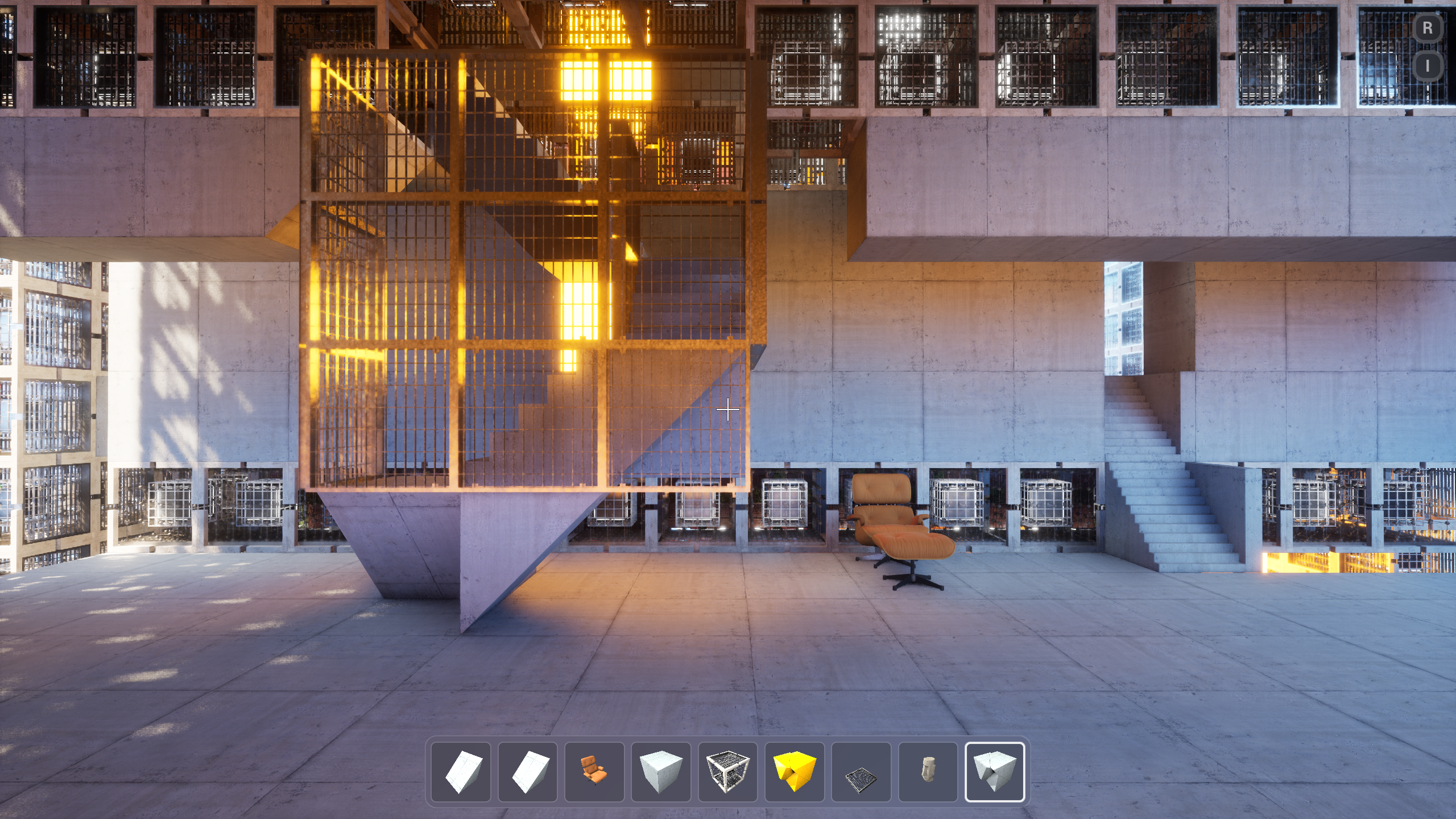
A photorealistic Unreal creator sandbox for modular construction, authored materials, stamps, Blueprint kits, procedural worlds, weather, water, and persistent creator data.
Gamibase contribution
Connects a creator action from placement through undo, save, reload, export, and capture so the team can see where a problem begins.
Still in development
Creation, atmosphere, water, saving, export, and capture are underway. Multiplayer creation, marketplace features, expanded cloud tools, and AI terrain are not finished.
First-party Bloxiti capture

Built by the Gamibase team
A social world-building Unreal project with native code, Blueprints, plugins, streamed state, online systems, cinematics, and encoded assets—used across documented Gamibase campaigns.
Gamibase contribution
Keeps project context, planned changes, Unreal asset edits, builds, reviews, and results connected from one session to the next.
Still in development
Univerce is still being built. It is not yet a shipped game, a completed Blueprint migration, or a production-scale online world.
First-party Univerce capture
Bring source, settings, assets, tests, build state, and earlier decisions into one view of the project.
Name the result, the people involved, the risks, what will not change, and how the team will check the work.
Use normal repository tools for source and UE Bridge for Unreal maps, Blueprints, and other encoded assets.
Keep builds, tests, captures, reviews, warnings, and unfinished work with the change they describe.
A successful build is not a shipped game. A screenshot does not show whether saving works. An installed plugin does not mean the full feature is finished.
What the project is trying to accomplish.
The technical or creative constraint that makes the work hard.
How Gamibase helped the team move the work forward.
What was built, played, tested, or reviewed.
What is still active development or outside scope.
A demo can stop when the presentation works. A game must keep building, loading, saving, evolving, and surviving handoff. First-party work does not replace a client portfolio—it shows the engineering standard behind the product.