What the project is
Repository structure, engine and target facts, existing assets, and the current state of the work.
Studio and Services solve different problems. Both keep the facts, decisions, and results with the project so the next session does not start from zero.
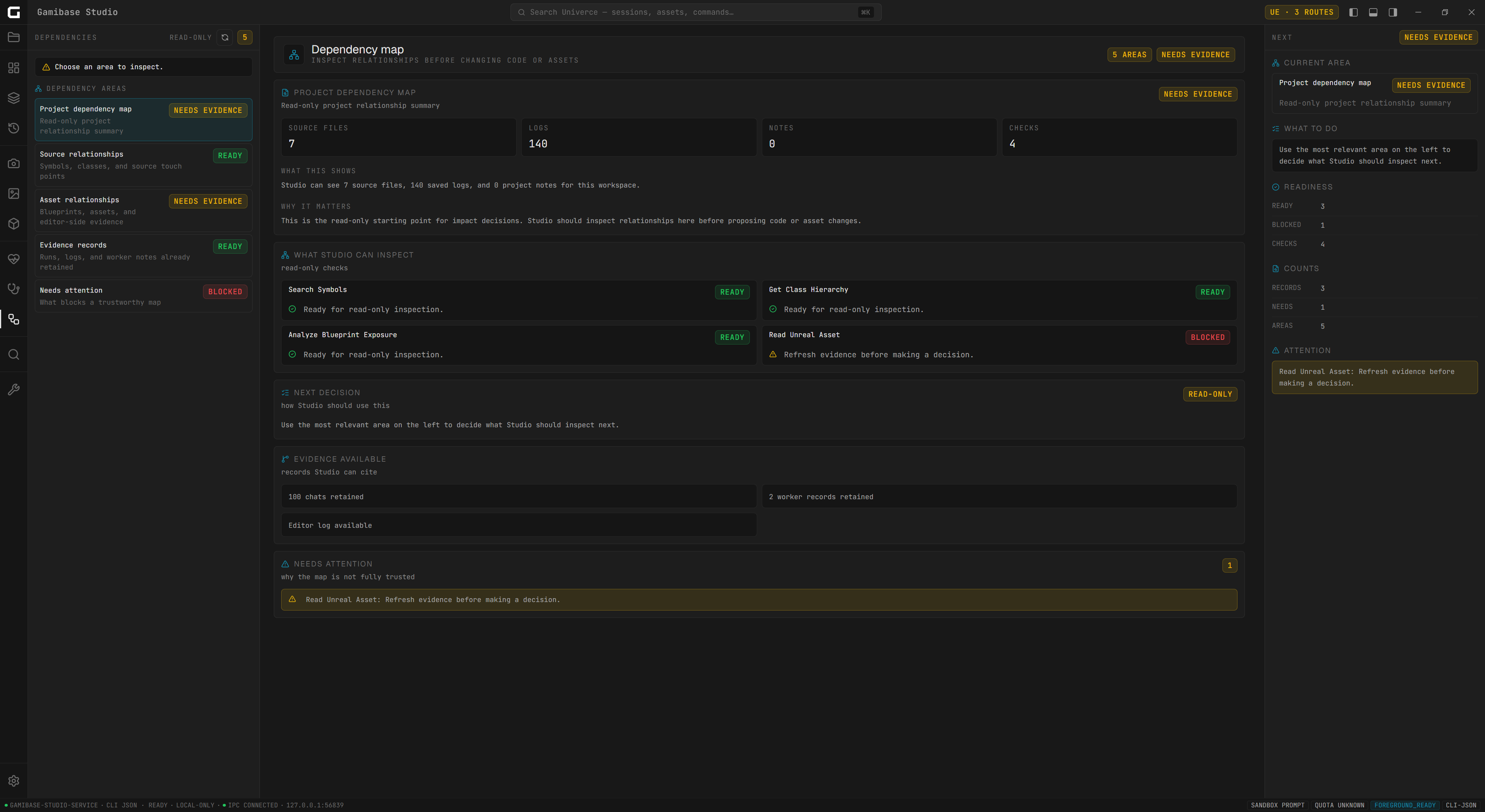
Keep project facts, creative choices, changes, and results clear so the next step is easier to understand.
Repository structure, engine and target facts, existing assets, and the current state of the work.
The approved direction and creative choices that should guide the next session.
The files, assets, and settings changed while the work was being done.
The playable result, build output, checks, and project values that show how the work ended.
Approved direction and iteration decisions stay visible so a later pass does not have to rediscover the game from scratch.
The diagnosis, agreed work, changes, checks, and handoff stay connected to the problem being solved.
Project memory keeps useful facts and decisions within reach. It does not replace creative judgement or pretend that every old note is still correct.
Explore the connected Studio workflow across direction, code, scenes, assets, builds, and play.